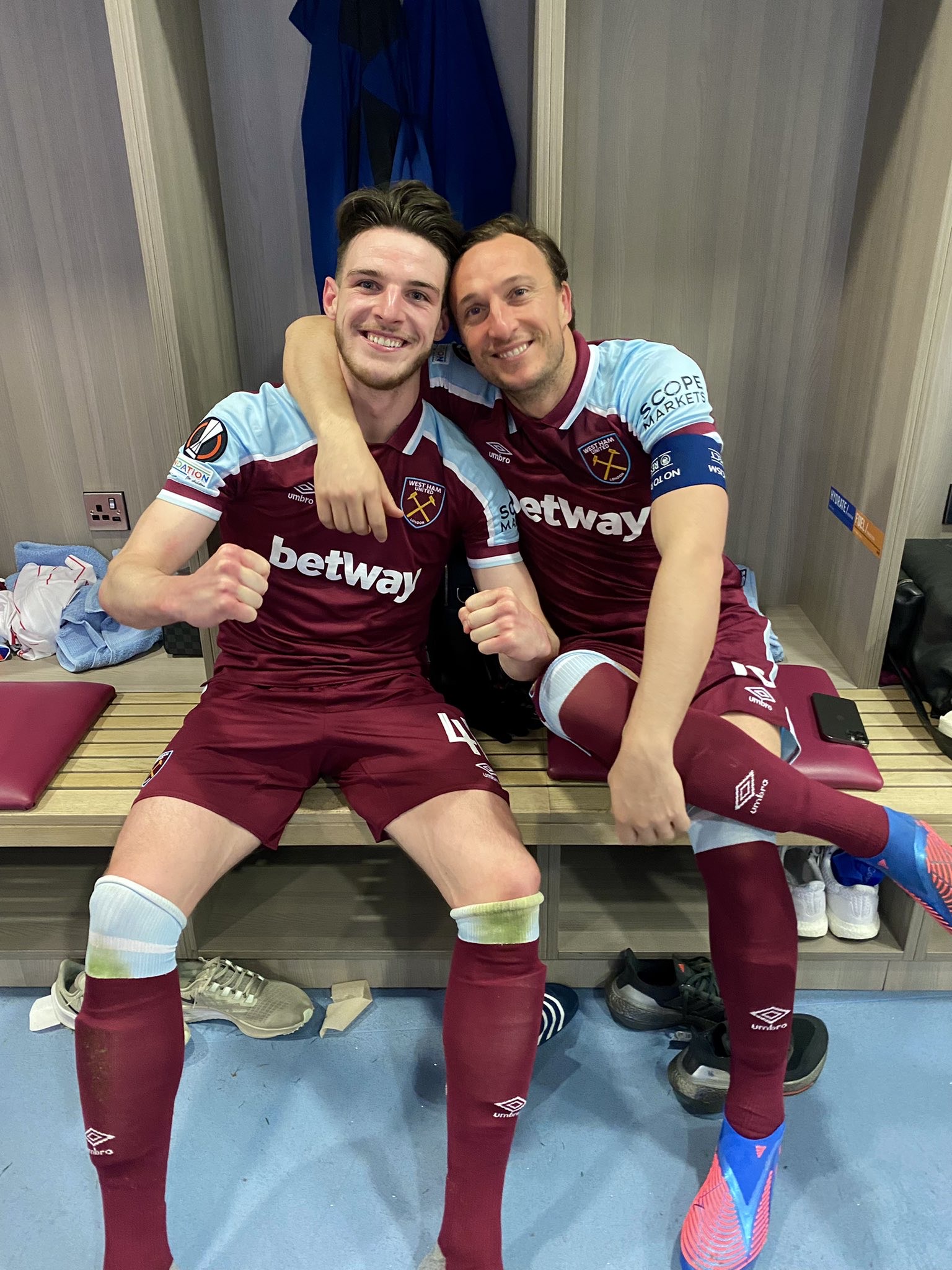
As the transfer window closed on Friday, one of the features of this summer’s activity in the Premier League has been the departure of a quartet of players who have been considered lynchpins of their clubs, indeed three of them were club captains. Having racked up over 1,200 appearances between them, supporters of each club will be concerned about what the future holds now their talisman has departed. Harry Kane, Declan Rice, James Ward-Prowse and Wilfried Zaha had all been instrumental to the fortunes of their respective clubs over the last decade or more and adequately replacing them will have been a high priority at Tottenham, West Ham, Southampton and Crystal Palace. Any fears that the fans might harbour, should be allayed by the record of clubs that have lost their best players, only to achieve more than they had done previously with their main man.
Wayne Rooney spent his formative years in Everton’s academy, famously announcing his arrival on the first team stage as a 16-year-old when scoring a spectacular last minute winner against Arsenal in 2003. He went on to become their top scorer that season with nine goals, drawing the attention of Alex Ferguson. Everton fans felt a sense of betrayal at his move to United at the end of that season, as exemplified by the graffiti that adorned a wall outside Goodison Park – “Rooney could have been a God, he chose to be a Devil.”
Added to this sense of a personal slight, the burning question was how would they cope with the loss of the home-grown prodigy; the signings of James Beattie, Marcus Bent and Tim Cahill in the summer of 2004 felt a little underwhelming. Having finished 17th in Rooney’s last season, Everton improved dramatically in the subsequent years. Cahill weighed in with eleven goals in the 2004/05 season, helping Everton reach fourth place, their highest position since 1988, as well as securing a place in the Champions League qualifying stages. Only once in the next ten years did they fail to finish in the top half, qualifying for Europe in five of those seasons, the most successful period enjoyed by the club since the late 1980s.
On the other side of Stanley Park, another academy graduate left Merseyside in the summer of 2004. Michael Owen who joined Liverpool as a 12-year-old in 1991, went on to become Liverpool’s top scorer for seven consecutive seasons before leaving for Real Madrid. It was a tough start for Rafa Benitez’s managerial reign as he had expected Owen to be part of his squad right up to the point of his exit on the eve of the new campaign. The Spaniard expressed his surprise at the move, saying at the time that “Michael was very happy when I spoke with him last week and we wanted him to stay.”
The Spaniard was relatively sanguine about how he was going to fill the void. “I’m not afraid,” Benitez said. “All teams around the world lose important players. You have to look to the future. We have the opportunity to try and balance the team. The supporters should know we have done the best for the club. There’ll hopefully be good news for them next week. We can be a stronger team.” And indeed they did become a stronger team, with the addition of the likes of Djibril Cissé and Xabi Alonso, they won the Champions League in Istanbul, 20 years after their previous triumph in Europe’s leading competition.
Both Rooney and Owen, like three of the four departures this summer, were part of their club’s academies. By contrast, Esteban Cambiasso was well-travelled when he joined Leicester City from Inter Milan in August 2014, having played club football since 1998 in his native Argentina, as well as Italy and Spain. The 34-year-old was brought in to help the newly promoted Foxes settle in the Premier League. Despite being bottom of the table at Christmas and seemingly cast adrift, Cambiasso led them to safety with a string of impressive performances that dragged Leicester up the table. With nine matches remaining they had looked doomed but reached the relatively dizzy heights of 14th place after picking up 22 points in those remaining games.
Cambiasso was understandably voted the club’s Player of the Year, commenting on receiving his award “I think the most important trophy is that Leicester City play next season in the Premier League.” But Cambiasso would not be able to enjoy the fruits of his labours as he joined Olympiacos in the summer of 2015, leaving Leicester supporters wondering how they would survive the following year. His replacement was an unknown quantity from Caen, costing less than £6 million. N’Golo Kante did not just help them to survive in Cambiasso’s absence but was a central figure as they pulled off their most unlikely Premier League triumph.
Another Argentinian who many considered to be indispensable by the club’s fans, arrived in England a few years before Cambiasso. Not only was he the player whose goal secured Manchester City’s first Premier League title in 2011/12 but Sergio Agüero was City’s top scorer for eight seasons in a row. When Agüero left for Barcelona in 2021 there was much speculation as to how could City replace such a prolific striker, who scored 184 Premier League goals. Initially the answer was that there was no need for a direct replacement. The onus for goals was shared between others with Raheem Sterling, Riyad Mahrez and Ilkay Gundogan the leading goal-scorers over the next three seasons before Erling Haaland’s arrival last season. In the post Agüero period City won three out of four Premier League titles as well as most significantly adding the elusive Champions League title this year.
In the last few years clubs, such as Brentford and Brighton, have routinely proved that letting go of their best players, is no impediment to steady and impressive progress. Neal Maupay moved to Brighton from Brentford in 2019, where he had been the Bees’ top scorer for the previous two seasons and his successor as top scorer Ollie Watkins, also moved on to Aston Villa in 2020. The year after Watkins left Brentford, they gained promotion to the Premier League and last season they finished ninth, their highest position in the top flight since 1938.
Maupay established himself quickly at Brighton in becoming their leading scorer for all three seasons he was there before being sold to Everton (who last week loaned the Frenchman back to Brentford). Again this did interrupt the Seagulls’ development as they reached their highest ever league finish and secured European football for the very first time. This summer Brighton sold their ‘crown jewels’ – Alexis MacAllister and Moises Caceido – and are fully expected to continue to flourish, without a hitch, as they embark on their European debut. Alongside these recent examples of Brentford and Brighton, the history of those clubs that have improved once their stars have left, provide some solace to the fans of those clubs adjusting to life after the departure of their heroes.
This piece will also appear online in the Guardian on Tuesday 5 September
 The Football Mine
This is a really excellent piece, Rick (and not just because it mentions LCFC at length!).
It is interesting to see how my hometown club is rebuilding after the losses of Maddison, Tielemans etc. Your article gives reason for hope …
Ben
Sent from my iPhone
>
LikeLike