
In the late 1980s and early 1990s Jack Charlton oversaw the Republic of Ireland’s status as a football nation shift dramatically from also-rans to a top 10 FIFA ranking, taking them to a World Cup quarter-final along the way. Charlton was responsible for casting the net for potential players far and wide, searching through the genealogy of various players to track down anybody with Irish roots. It became a stick with which to beat him by certain media figures who were irked by the success of the team, as Paul Doyle wrote in Charlton’s obituary in the Irish Times.
“Charlton was not the first manager to recruit foreign-born players with Irish ancestry but he did so more than any other. There were some heckles about players with English accents representing Ireland but most of the sneers about ‘plastic Paddies’ came from the British media. Generally in Ireland the foreign-born players who chose to represent the country were embraced as sons of the diaspora, especially as the spirit with which they performed invalidated allegations of opportunism.”
Fast forward thirty-odd years and another Jack C is undertaking similar searches but this time on behalf of the Football Federation of Guinea-Bissau. For a country with a population of 2 million, the need to expand the pool of potential players is understandable and this is where Jack Coles, plays a crucial role. Coles’ background is as a Recruitment Analyst, spending four years at Leicester City’s Academy, before moving to the Coventry City where he is Head of Data Analysis at the club.
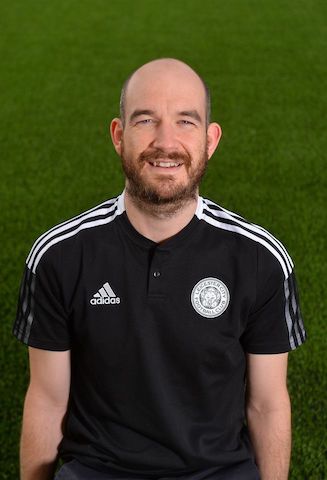
“While playing the video game Football Manager,” Coles says. “I became aware of the facility to switch players from one country to a different nation. Initially I looked into the links between Curaçao and the Netherlands and soon realised that there were plenty of players who had dual nationality.” This sparked his interest resulting in Coles conducting research using the international football ratings index Elo on how this might help nations who did not have a particularly strong team, particularly those in Africa who had historical links with other countries, predominantly from Europe.
Discovering players via Football Manager is not a novel concept, a precedent was set by the emergence of Ben Brereton-Diaz, who started playing for Chile in 2021. Having revealed in Blackburn’s match programme that his mother was born in Chile and moved to England with her parents when she was a teenager, things moved quickly. His Chilean heritage was then included in his profile on Football Manager and because of his excellent goalscoring form for his club drew the attention of Ricardo Garcia, Chile’s football analyst. Garcia contacted Ben Corbyn, son of Jeremy, a former head of international recruitment at Arsenal who had previously helped Chile with registering players. Corbyn set up an introduction for the manager Reinaldo Rueda with Brereton-Diaz, who has since become a regular starter for La Roja.
Coles identified Guinea-Bissau as the football nation that could benefit from the widest difference between its own ranking (which is currently 104) and the countries that it could potentially draw players from, in Portugal, Spain and France, who are all in the top 10. Having tracked down Guinea-Bissau’s technical director via LinkedIn he called him to offer his services as a consultant on a voluntary basis. Although there was some initial scepticism about why he wanted to help them, the Federation’s president gave the go ahead after Coles sent an outline of his proposal.
“The idea of offering help to a nation who were low on the Fifa rankings and who could benefit from exploring the dual nationality route was born,” Coles says. This year they have qualified for their fourth successive appearance at AFCON, having made their debut at the Finals in 2017, having missed the previous 30 tournaments so there was already talent amongst the nation’s footballers. As Coles only started helping them out a year ago, he cannot claim that this is down to him, but he is now looking to build on the foundations of their recent success.
After Fifa approved a rule change in September 2020, it paved the way for more players to take advantage of multiple nationality. Players are now permitted to switch if they have played no more than three competitive matches at senior level prior to them turning 21. However, if they have appeared in any World Cup finals matches or tournaments such as the Copa America or the European Championships (excluding qualifying matches) they are disqualified from switching countries.
Tracking down players often starts with Coles trawling through databases and then making approaches sometimes through LinkedIn, either directly to the players themselves or through their agents. It is often a laborious process as they have to be convinced this is the right move for them and Coles has encountered resistance from agents. “I had tried to contact one player in particular via his agent but was getting no response,” Coles says. “Then the player switched agents and through the new agent I got to speak to the player who told me that his old agent hadn’t passed on any of my messages.”
It can be difficult to persuade players to switch as they are wary of the low ranking of the country and possible reputational risk. There can also be reluctance to join training camps as the facilities are relatively limited, with players balking at the possibility of getting injured and not receiving the highest professional treatment that could ultimately affect their club careers. Once a few have committed there is what Coles describes as a ‘snowball effect’ which makes it easier to persuade others to join.
Coles cites Carlos Mané as one of the more successful discoveries. Mané was born in Lisbon, spending most of his early career at Sporting and represented Portugal through every age group, from Under-15s to Under-23s amassing over 70 appearances including representing them at the 2016 Olympics. He also spent time on loan in Germany at Stuttgart and Union Berlin before moving to his current club Turkish Süper Lig club Kayserispor in 2021.
Mané was coaxed into making his debut for Guinea-Bissau at the age of 29 last month against Sierra Leone. This was Guinea-Bissau’s last AFCON qualifying match and was effectively a dead rubber as they had already qualified. It gave the federation the perfect opportunity to blood some new players, with a total of eight making their first appearance for the national team in that one match alone. Coles introduced players such as 20-year Ronaldo Camara, who like Mané had represented Portugal at various age groups, and Houboulang Mendes who plays for UD Almería in La Liga. As Coles is still in his first year this is just the beginning and there are several higher profile players on his radar including Everton’s new signing Beto and Ajax’s Carlos Forbs.
In a reversal of the trend of European players switching allegiance, there are two Premier League players who were born in Africa but chose to represent European nations. Ansu Fati, who is on loan to Brighton from Barcelona, was born in Guinea-Bissau, but moved to Seville when he was six-years-old. His father had left for Europe to find work to support his family before Fati was born so he met him for the first time on arriving in Spain. Fati played for the local team Herrera and Sevilla before following in his elder brother’s footsteps, joining Barcelona’s academy La Masia in 2012. Fati has nine caps for Spain and was an unused substitute in Thursday’s win over Scotland.
Luton Town’s Chiedozie Ogbene became the first African-born player to represent Ireland after making his debut in 2021 against Hungary. Ogbene was born in Lagos but moved to Cork with his family when he was 8-years-old. Considering the current state of the Irish team, under their beleaguered manager Stephen Kenny, and having dropped out of the Top 50 FIFA ranking, the FAI might consider harnessing Coles’ expertise to help them climb back up the rankings and relive the glory days of the other Jack C.
*An edited version of this piece will be published by the Guardian
 The Football Mine
Excellent article
LikeLike
Thanks, glad you enjoyed it.
LikeLike